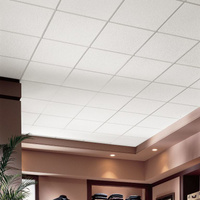
 Suspended ceiling systems are secondary ceilings suspended from the ground floor slab above, creating a space between the lower side of the floor slab and the top of the suspended ceiling. This space created by the suspended ceiling can provide a useful space for the distribution of cables and plumbing. While suspended ceilings add a decorative appearance to buildings, it is also preferred for sound and heat insulation.
How is a Suspended Ceiling Applied?
Suspended ceilings can be manufactured from materials such as tiles, mineral fiber, metal, plasterboard and laminates, and are often drilled to provide specific levels of acoustic sound insulation that can be used to control reverberation time in cavities. There are also complex systems that can include custom panels such as molded panels, acoustic partitions, fallen panels, integrated service modules and the like.
Advantages of Using Suspended Ceiling
To pipes / cables etc. Easy access
One of the most popular reasons for having a suspended ceiling is to hide invisible structural or mechanical components such as pipes, plumbing, and cables. The flexibility of the suspended ceiling means you have easy access to hidden pipes or cables for repairs; The panels can be easily opened when access is required on the ceiling and can be properly re-positioned after repairs have been made.
Quick setup
We know that the way businesses operate causes minimal disruption and a downtime is mandatory for the rest of the company when installing suspended ceilings. Fortunately, being equipped by an experienced professional company means the overall project will be completed quickly and efficiently so you can get started in no time at all.
Sound insulation
Unlike plasterboard ceilings, suspended ceilings provide enhanced acoustic properties, so noise pollution from floors above is significantly reduced. Therefore, it is important to consult a professional to ensure the correct flooring and insulation is installed for extra sound insulation.
Fireproof
Fire-resistant suspended ceilings can provide 1 hour protection, so all employees in your office and adjacent rooms can evacuate the building for emergency services to come. Also, another advantage of using suspended ceilings is that you integrate a fire detector.
Moisture and mold resistance
Suspended ceilings are particularly popular in areas with high humidity, due to their resistance to bacteria and moisture. This makes them ideal for humid environments such as kitchens and bathrooms where hygiene is paramount.
Insulation for energy efficiency
By lowering the ceiling height of your office with suspended ceiling installation, it provides an extraordinary insulation, which can lower your energy bills as there is less space for heating. Also, the white ceiling panels create a highly reflective surface that can illuminate the entire room and give the illusion of more space.
Decorative use
Suspended ceilings provide an excellent solution for storing cables and pipes in an organized and stylish way, while providing easy access when a problem occurs.
 Flooring Systems